Eastern
MediterraneanTales of the Eastern Mediterranean - Theme Night
Every Theme Night here is a secret until the first plate lands. Tonight, that secret is a journey around the Eastern Mediterranean, from sun-warmed coastlines to centuries-old spice markets, one course at a time.
Welcome back - and to those joining us for the first time
You know the drill by now: the menu's a secret until it's in front of you, and part of the fun is never quite knowing where the night will take you. This page is the bit you haven't seen before - the story behind each dish, ready to read as it lands on the table.
Tick a dish off once you've tasted it and watch the trail below fill in as the evening goes on.
The Savoury Journey
Avgolemono
Traditional Greek chicken, rice and lemon soup
The story
The name simply means egg-lemon, and the idea behind it is older than modern Greece. The sauce is widely thought to have Sephardic Jewish roots. Jewish cooks in Iberia made a version before the expulsion from Spain, souring it with verjuice, pomegranate or bitter orange juice, and lemon only became the standard later. In Sephardic kitchens it is known as agristada, and the Arabic tarbiya and Turkish terbiye are close cousins.
Greece took it and made it a national comfort. Egg yolks and lemon are whisked together, then warm broth is stirred in slowly so the eggs thicken the soup into silk without a drop of cream. The rice does quiet work too, its starch helping keep everything smooth. Some Sephardic families still serve a version to break the Yom Kippur fast.
Latkes & Lox
Israeli potato cakes and smoked salmon with cream cheese and dill
The story
The word latke is Yiddish, borrowed from an East Slavic word for a small fried pancake, which in turn traces all the way back to the ancient Greek word for olive oil. That oil is the whole point. Latkes are eaten at Hanukkah to remember the oil in the Temple in Jerusalem that burned for eight days. In modern Hebrew they are called levivot.
The first latkes were not made from potatoes at all. In the Middle Ages they were more likely cheese pancakes, and cheese versions stayed common in Ashkenazi communities into the 19th century. Then the potato spread across Poland and Ukraine, it was cheap and filling, and it never left. Smoked salmon and cream cheese is the pairing most people know from Jewish delis, and here it tops the crisp potato cake.
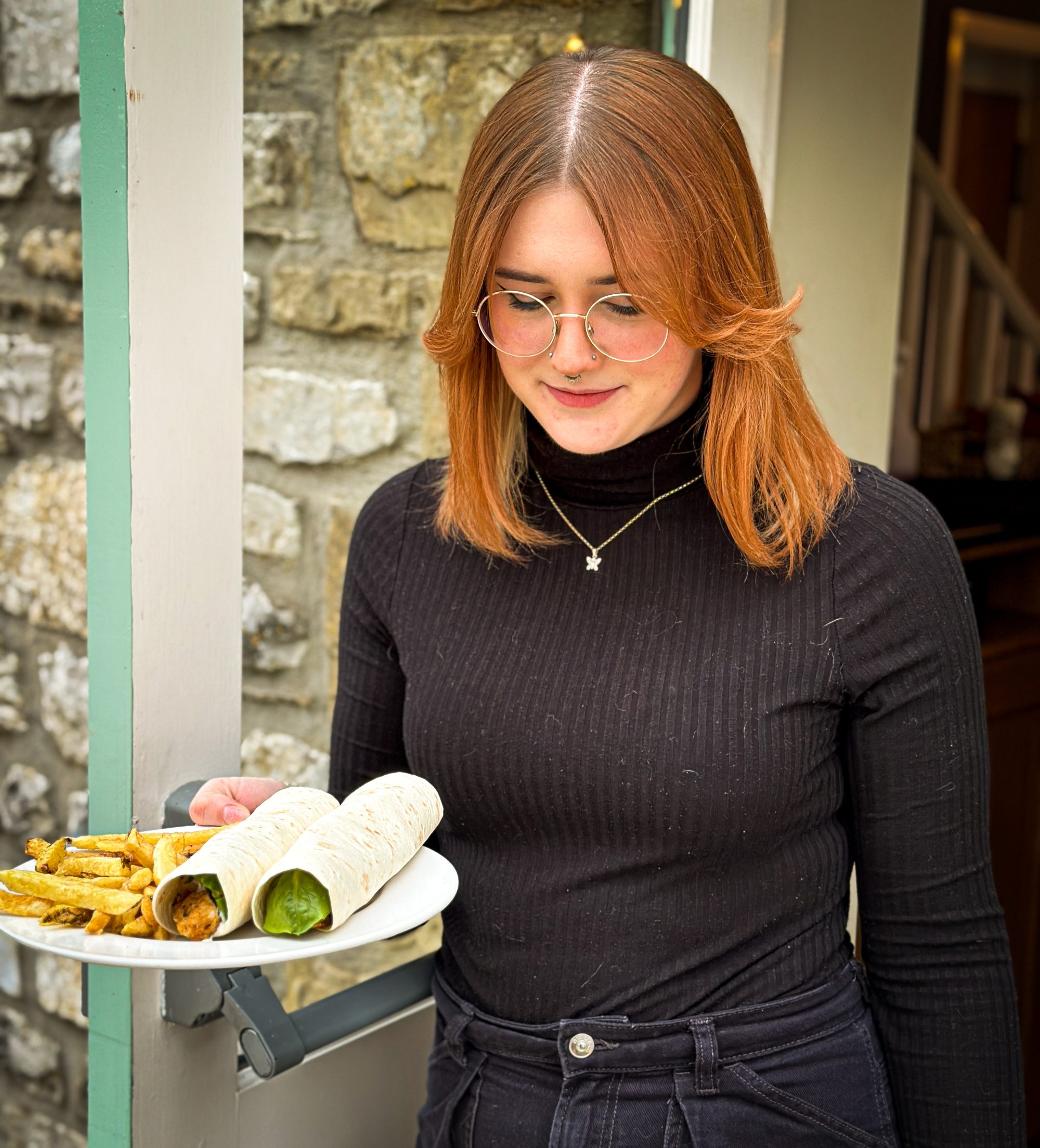
Gözleme
Spinach and cheese filled flatbread from Turkey
The story
The name comes from the Turkish word közleme, meaning to cook on embers, from köz, an ember. It is old enough to appear in a Turkish dictionary from 1477, and the 17th-century traveller Evliya Çelebi wrote about it too. The method has barely changed since: a simple dough of flour, salt and water is rolled paper thin, filled, sealed, and cooked on a domed griddle called a sac.
Spinach and white cheese is one of the classic fillings, though cooks fill it with herbs, potato, mushrooms, mince or egg depending on the region. In Ottoman times, bakers making gözleme for Jewish customers brushed it with sesame oil instead of butter, to respect the rule against mixing meat and dairy.
Sfeeha
Syrian open spiced meat pie
The story
The name comes from the Arabic ṣafīḥa, meaning a sheet, which describes it neatly: a flat sheet of dough with a topping spread across it. Flatbreads have been baked across the Fertile Crescent since prehistoric times, and by the medieval Arab world, bakers were using brick ovens to make topped and filled breads like this one. Food historians say the exact origin of modern sfeeha is unknown.
Syria, Lebanon, Palestine and Jordan all claim their own versions, and the town of Baalbek in Lebanon is especially famous for it. The open-faced kind is sfeeha, while the closed, folded pastries are usually called fatayer. It is also a close relative of lahmacun and manakish, and the spicing changes from cook to cook and town to town.
Shrimp Fatteh
Modern take on a traditional Lebanese dish of fried bread, aubergine and yoghurt sauce with paprika fried prawns
The story
Fatteh comes from the Arabic fatta, meaning to break apart or crumble, and that tells you how it began. Stale bread was never thrown away. It was broken up, crisped and layered with whatever was on hand, which stretched a meal when food was scarce. Similar dishes appear in Arabic cookbooks as far back as the 10th century, and fatteh was popular in the Fatimid caliphate between the 10th and 12th centuries.
In the Levant the classic version has a layer of yoghurt on the bread, often with chickpeas or aubergine, finished with olive oil and spice. Fried aubergine fatteh is much loved in Lebanon and Syria. Tonight's version is a modern twist, adding prawns fried in paprika on top, but the idea underneath is still centuries old: bread, creamy sauce and something good piled on top.
Yakhne b'Lahme
Lebanese spiced lamb and vegetable stew served with herb roasted potatoes
The story
Yakhne comes from the Persian word yakhni, linked to the covered clay pot the stew was first cooked in. It began as a meat stew in medieval Iranian cooking, then travelled west through the Ottoman Empire, picking up local ingredients as it went. The word passed into Ottoman Turkish and from there into Arabic, and b'lahme simply means "with meat".
Across the region the recipe follows a familiar pattern: a base of browned onion, tomatoes and olive oil, with garlic and warm spices, and the vegetables and meat simmered together until everything softens and the sauce thickens. It is usually served over rice or bulgur, so tonight's herb roasted potatoes are a modern touch.
The Sweet Finale
Two ways to finish - you'll be offered one or the other, not both. Read the story for whichever lands in front of you.
Znoud el Sit
Crispy pastry rolls filled with mascarpone, almonds and raisins
The story
The name means "the lady's arms", a poetic nod to the plump, rolled shape of the pastries. They are a classic of Lebanese and Syrian sweet shops, often traced back to Ottoman-era kitchens where Persian, Arab and Turkish influences blended. Thin pastry is wrapped around a filling, baked or fried until crisp, then soaked in a light syrup of sugar, water and lemon, often scented with orange blossom or rose water.
The traditional filling is ashta, a thick cream made by slowly cooking milk, and the sweets are linked to Ramadan and Eid, when they appear on tables after the fast. Tonight's version swaps in mascarpone, with almonds and raisins for texture, a modern echo of that rich, milky centre.
Basbousa
Egyptian semolina cake
The story
Basbousa is baked semolina cake soaked in sugar syrup and cut into diamonds or squares, and it is found across Egypt, the Levant, North Africa and beyond. Its history is disputed. The food writer Alan Davidson suggested it may descend from ma'mounia, a 9th-century Abbasid dish of rice cooked in fat and syrup, with semolina later replacing the rice.
It goes by many names: harisa in the Levant, namoura in Lebanon, and revani in Turkey, where an 1844 Ottoman cookbook records a recipe of baked semolina, butter, sugar and eggs soaked in syrup. Wherever it appears, the idea is the same: a simple cake, patiently soaked, that tastes far richer than its ingredients suggest.

a taste of Korea & Japan
You've tasted the whole journey
Six countries and seven courses later - how would you rate tonight?
Thanks so much for letting us know - we hope to see you at the next Theme Night!
Since you had a five-star evening, would you mind sharing it on Google?
Leave Us a Review on Google